
AI in Everyday Life: How Artificial Intelligence Shapes Our World
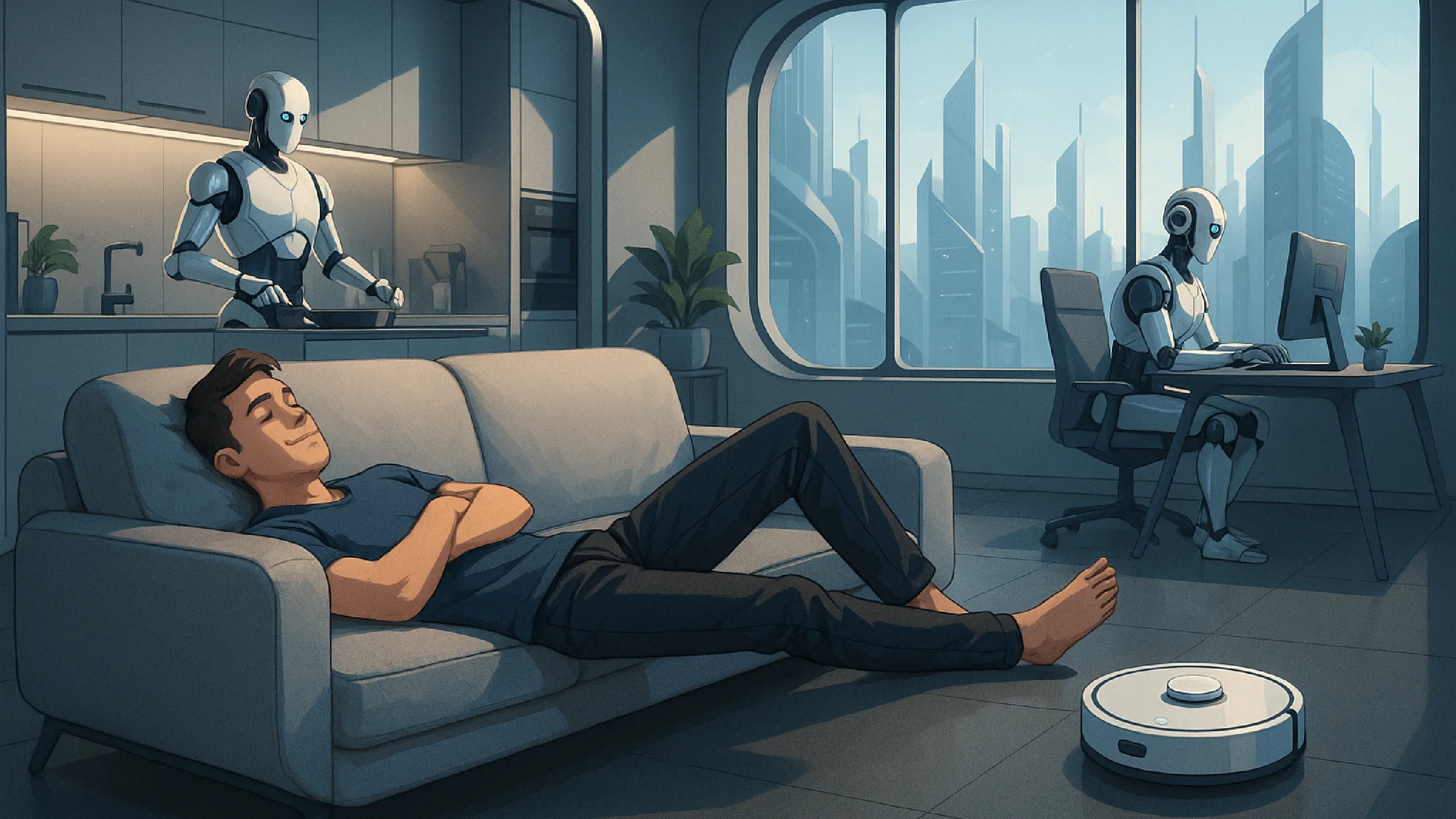
Every morning, millions of people wake up to alarms set by their voice assistants. The coffee machine starts brewing automatically, playlists adapt to our mood, and navigation apps already know the fastest route to work. Few of us stop to think about it — but artificial intelligence has quietly taken a seat at our breakfast tables.
The influence of AI in everyday life is no longer confined to tech labs or science fiction. It’s personal, practical, and increasingly invisible. AI is there when you unlock your phone with Face ID, when Netflix recommends a new show, and even when your smartwatch tells you it’s time to stand up. What began as an experiment in automation has become an unspoken partnership between humans and machines — one that’s redefining modern living.

The Subtle Intelligence of the Smart Home
Imagine walking into your home and the lights turn on softly to your preferred brightness, music fades in at just the right volume, and the thermostat adjusts to a comfortable 21°C. That’s not magic — it’s machine learning.
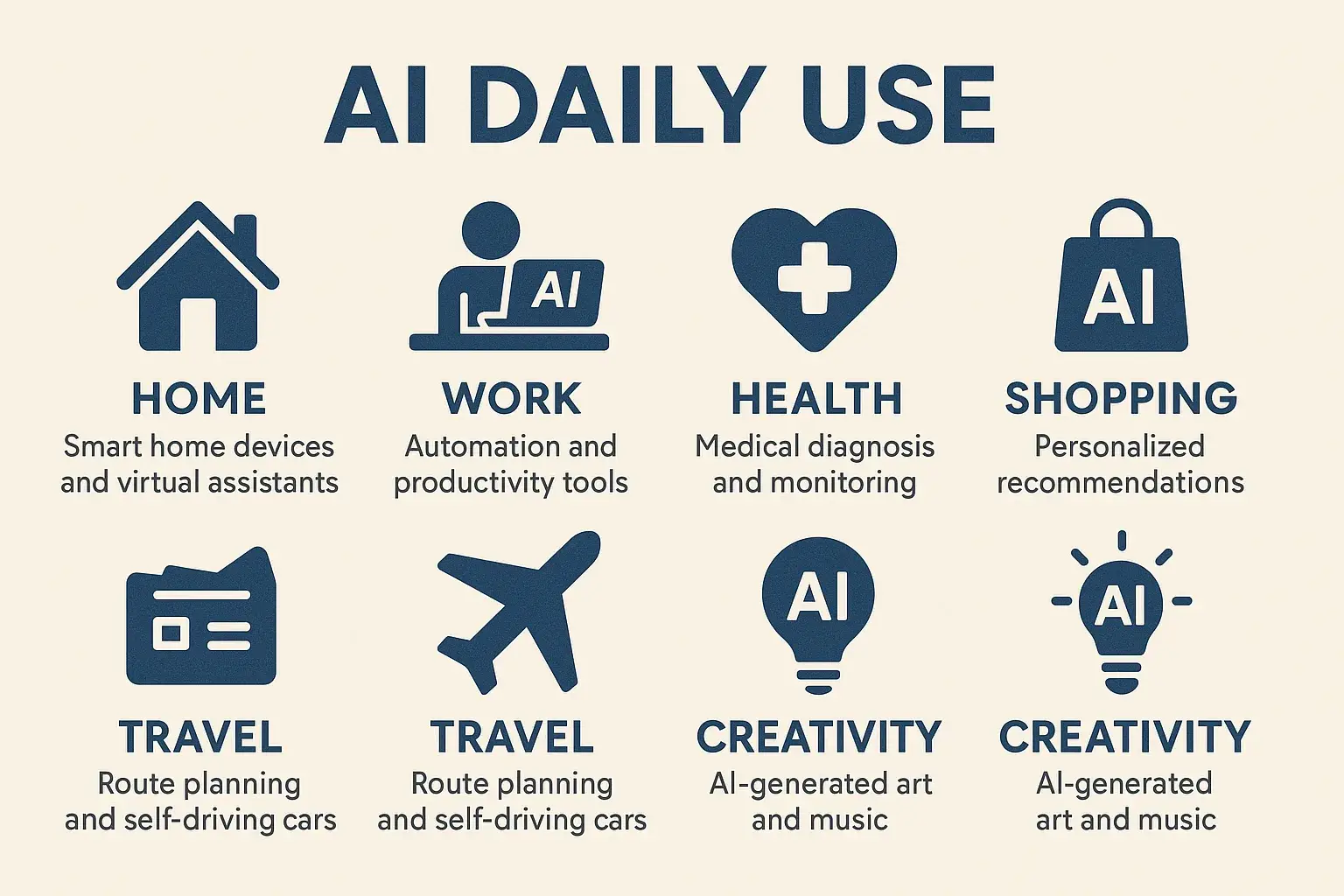
AI in everyday life thrives on these micro-moments of convenience. Smart home assistants like Alexa, Siri, and Google Assistant learn your habits through repetition. The more you interact, the smarter they become — adjusting routines, predicting needs, and even reminding you when you’re out of milk.
It’s not just comfort; it’s efficiency. AI-driven appliances now help reduce waste, monitor energy usage, and secure our homes through facial recognition and motion alerts. The home has become not just smart — but adaptive.
Personalized Worlds in Our Pockets
Every scroll, click, and search we make feeds vast networks of algorithms that tailor the digital universe around us.
From Spotify’s “Discover Weekly” playlist to Amazon’s eerily accurate shopping suggestions, personalization is one of the most visible uses of AI tools today.
Search engines also rely heavily on artificial intelligence. When you ask Google a question, AI interprets not only your words but your intent — whether you’re looking for a nearby restaurant or global statistics. It’s what makes the internet feel personal and, at times, almost intuitive.
Workplaces Transformed by AI Tools
Step into an office in 2025, and you’ll likely find AI working quietly behind the scenes. Reports draft themselves with ChatGPT, data dashboards auto-update through predictive analytics, and email replies are generated before you’ve even typed a word.
Across industries, AI automation has become a silent collaborator. Marketing teams use generative AI to brainstorm ideas, developers use it to debug code, and analysts use it to summarise vast reports in seconds.
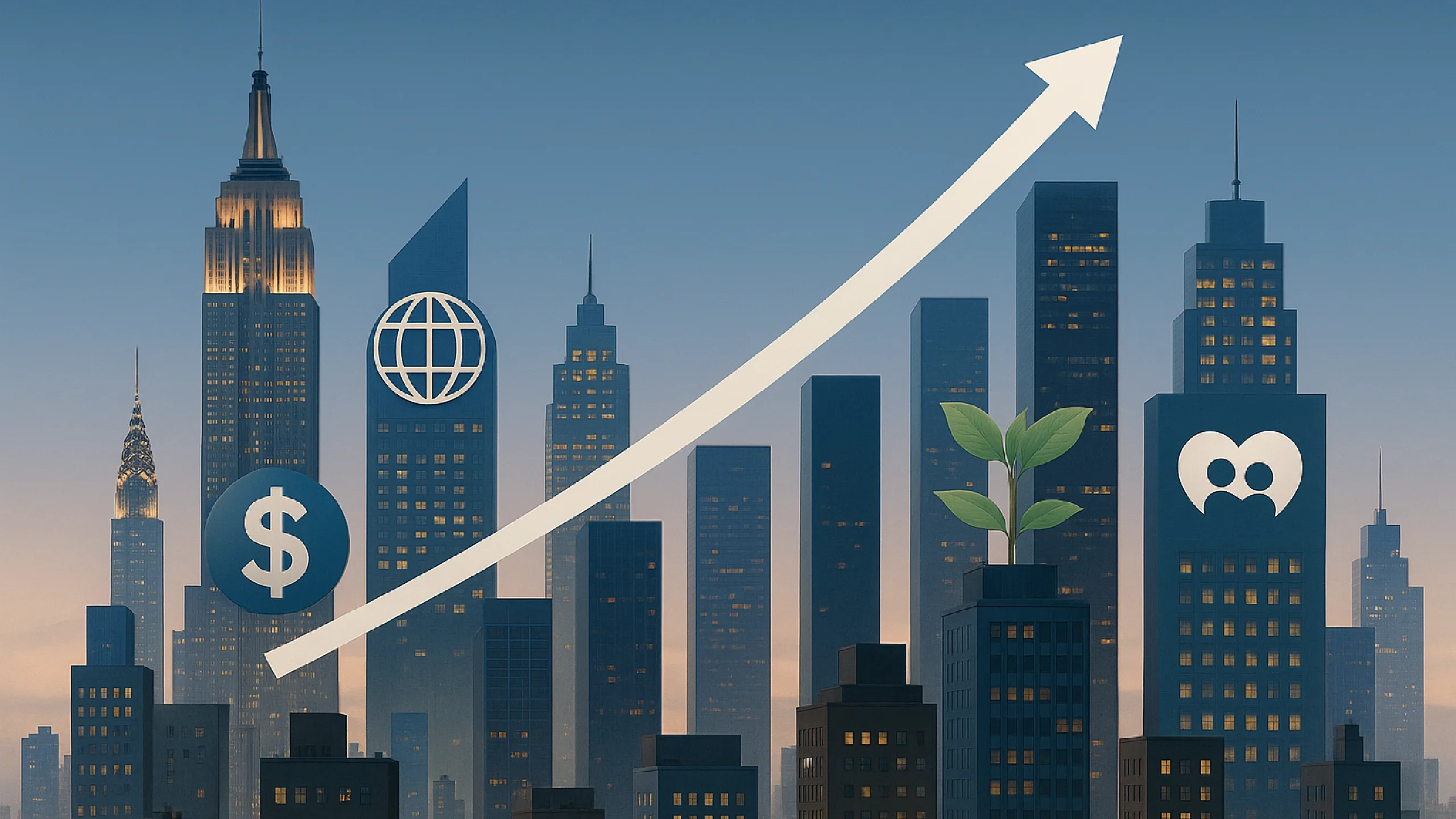
These systems don’t just save time — they amplify human potential. According to McKinsey, AI could contribute $4.4 trillion annually to global GDP by the end of the decade, largely through productivity gains.
The Human Side of Healthcare AI
Perhaps nowhere is AI in everyday life more meaningful than in healthcare.
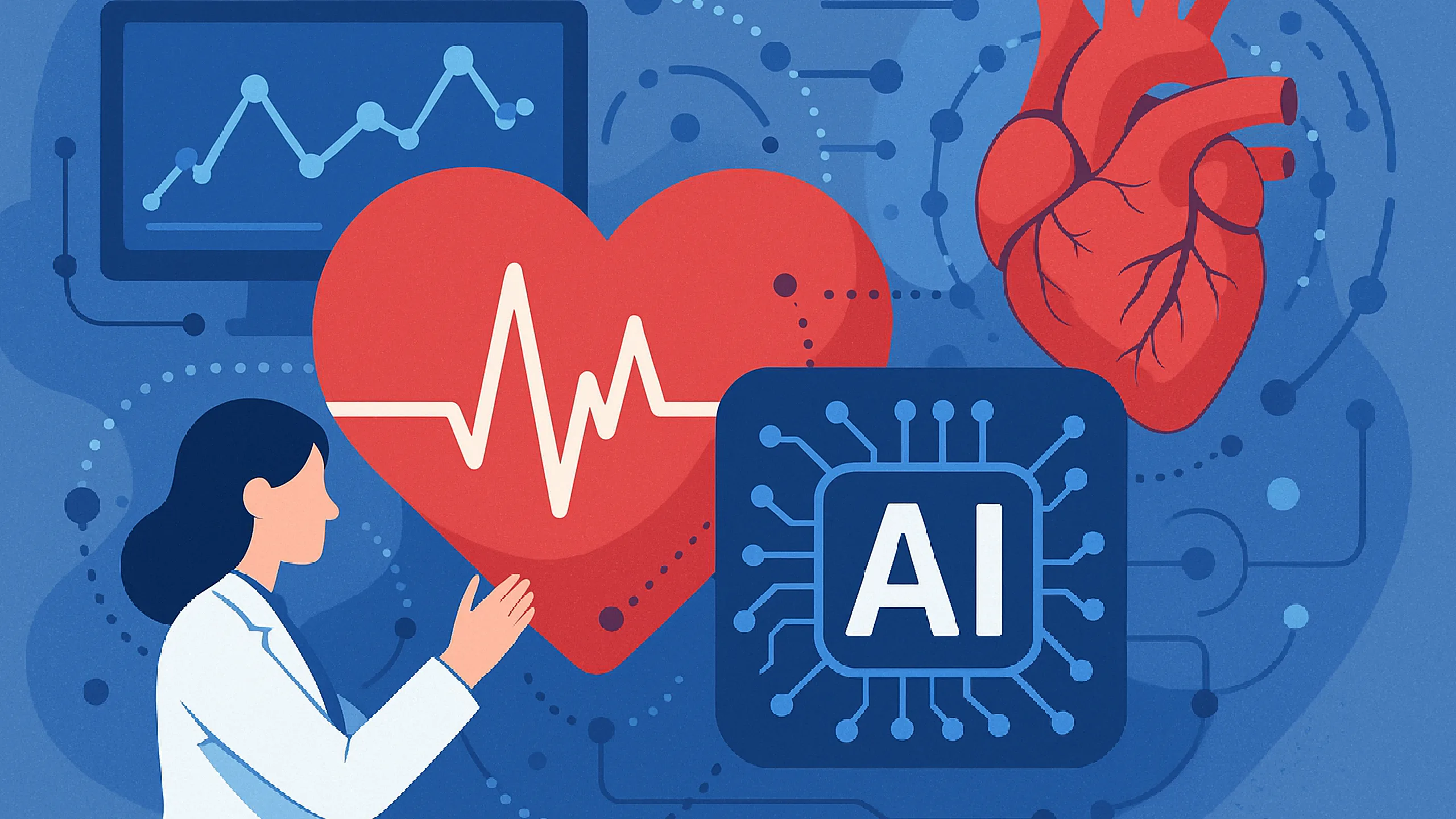
Wearable devices now act as digital companions, tracking heart rate, sleep quality, and even detecting irregularities before symptoms appear.
Doctors, too, are relying on AI to support diagnosis — scanning thousands of medical images in seconds or predicting disease patterns in real time. What once required entire teams of specialists can now happen in moments, saving lives and improving care.
AI doesn’t replace doctors; it empowers them. It transforms data into insight and gives patients a more active role in managing their wellbeing.
Journeys That Think for Themselves
Whether commuting across a city or planning a holiday abroad, AI is often the invisible co-pilot.
Navigation apps like Google Maps and Waze analyze traffic conditions and weather data to chart the quickest route. Rideshare companies use AI to match drivers and passengers, anticipate demand spikes, and even adjust pricing automatically.
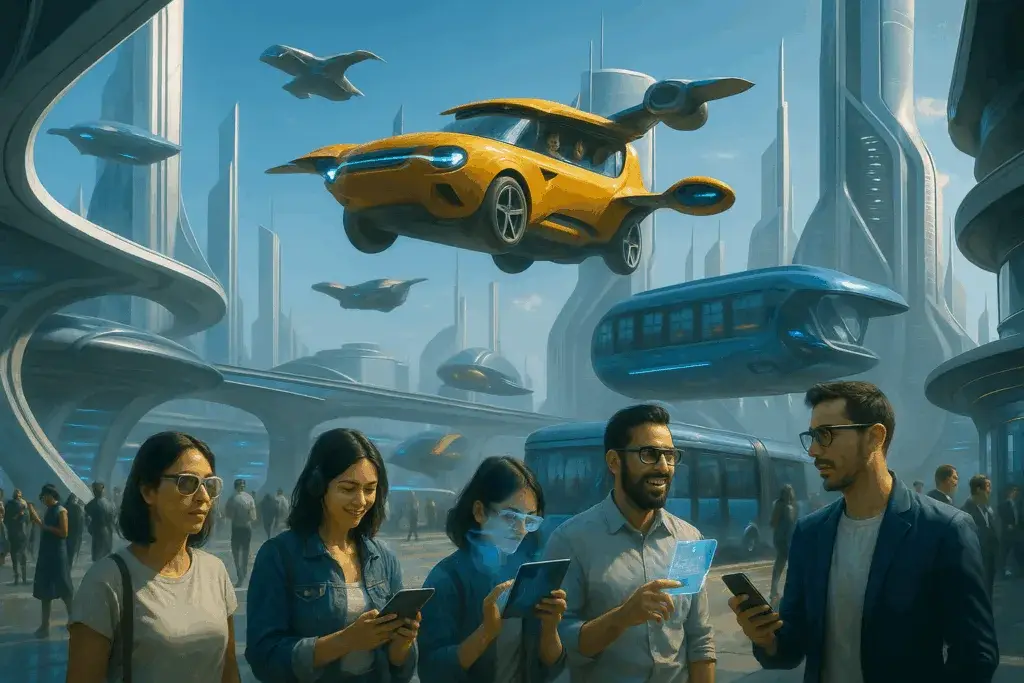
With autonomous driving trials accelerating, the future of AI in everyday life could include roads filled with cars that drive themselves — reducing accidents, fuel use, and congestion.
Creativity and the Human-AI Partnership
AI has also become a creative partner. Designers use Canva AI to generate visuals, musicians use Sunō and Udio to compose melodies, and writers use tools like ChatGPT to spark ideas.
It’s not replacing imagination — it’s amplifying it. Everyday creators now have access to tools that were once exclusive to professionals, democratizing creativity across industries and age groups.
Living with AI — The Balance Ahead
But for all its promise, the rise of AI in everyday life also invites caution.
There are growing debates around data privacy, algorithmic bias, and the potential over-reliance on technology. The challenge isn’t to resist AI — but to guide it responsibly.
As AI becomes more ingrained in our homes, jobs, and decisions, digital literacy and transparency will matter more than ever. The next decade won’t just be about building smarter systems — it will be about learning to live wisely with them.
A Quiet Revolution
The real power of AI in everyday life lies not in replacing us but in reshaping how we think, act, and create. It’s the invisible thread connecting our routines — from how we wake up to how we rest.
Artificial intelligence has become the electricity of the 21st century: largely unseen, endlessly useful, and deeply transformative. Whether we notice it or not, it’s already part of who we are.
See our other article – The Future of Work: How AI Transforms Every Industry
Questions & Answers
Q1: What are some examples of AI in everyday life?
Smart assistants, navigation apps, personalized recommendations, and wearable health devices all use AI daily.
Q2: How does AI improve daily efficiency?
AI automates repetitive tasks, offers real-time suggestions, and optimizes decisions using data patterns.
Q3: Is AI replacing human creativity?
No. AI enhances creativity by providing tools for faster ideation and execution. Humans remain the decision-makers.
Q4: What are the risks of everyday AI?
Data privacy, algorithmic bias, and over-reliance on automation are the main concerns facing users and policymakers.
| Source | Link |
|---|---|
| Forbes – Everyday Uses of AI | forbes.com |
| Vision Factory – Practical Uses of AI | visionfactory.org |
| Daffodil Insights – 20 Uses of AI | insights.daffodilsw.com |
| Goldman Sachs – Generative AI & GDP Impact | goldmansachs.com |