
Why AI geopolitics matters now
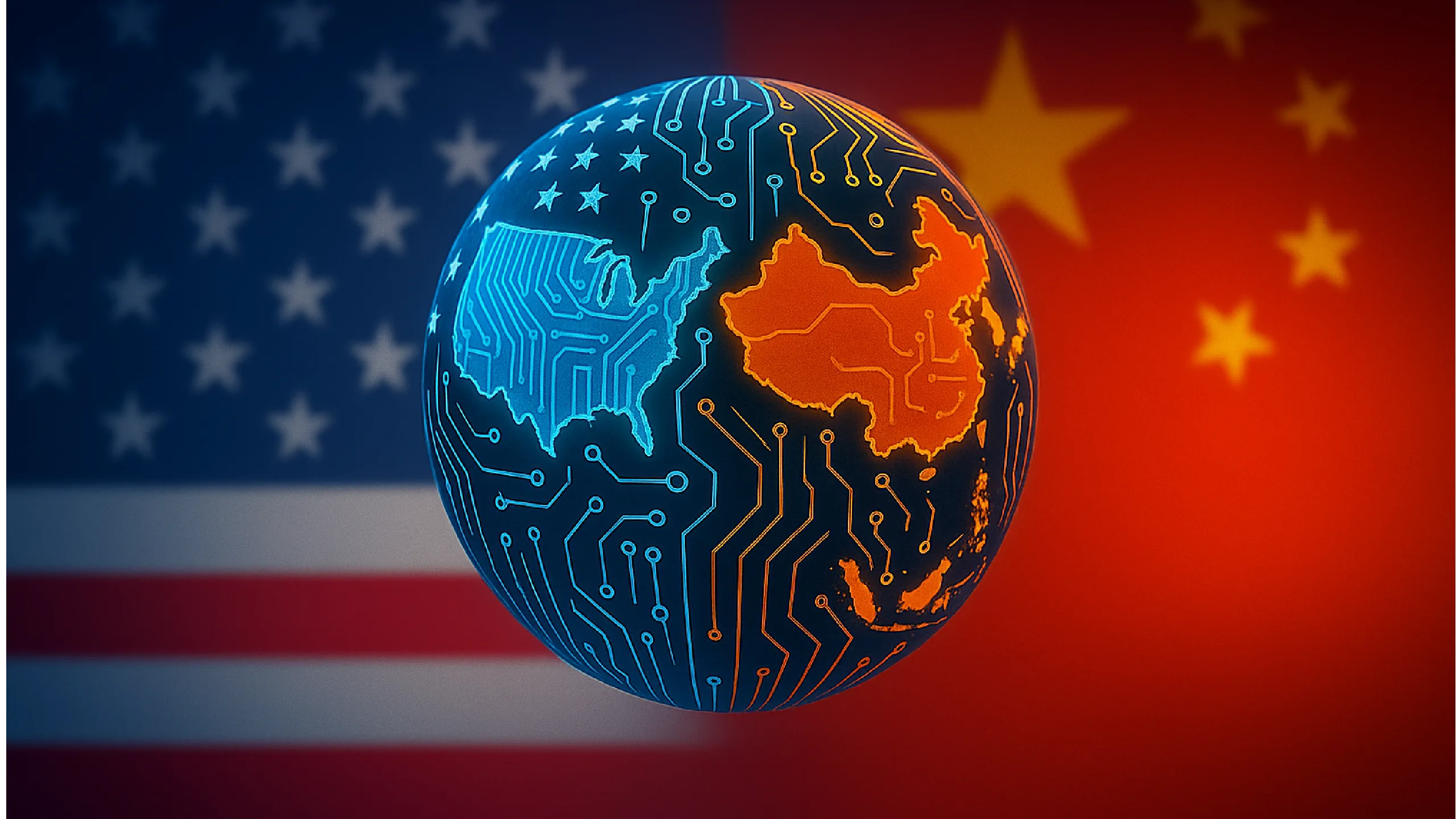
In the 21st century, AI geopolitics is no longer just a niche academic concept — it has become a strategic battlefield. Analysts increasingly see artificial intelligence as more than a technological revolution; it is a lever of power in global competition, especially between the U.S. and China. In just a few years, this shift could redraw alliances, reshape military capabilities, and redefine economic dominance.
As nations race to control AI infrastructure, regulation, and deployment, one question looms large: who will define the rules of the coming digital order?

The U.S. vs China: Rival Visions of Strategic AI
Competing models of AI dominance
The United States promotes open innovation and private-sector leadership, backed by collaboration with democratic allies. China, by contrast, frames AI as a core element of national sovereignty — an instrument of state power that extends through infrastructure, digital governance, and exports to developing nations.
The result is a clash not only over technology, but ideology: a model of open collaboration versus one of state-directed digital control.
Research output and closing gaps
China now rivals the U.S. in AI research volume and investment. By 2024, China’s AI publications matched the combined output of the U.S., UK, and EU. Its share of highly cited papers has also increased sharply.
Although the U.S. maintains an edge in computing power and infrastructure, Chinese AI models are advancing rapidly. Some analysts suggest China may be only three to six months behind the U.S. in major AI capabilities — a gap once measured in years.
The Geopolitical Stakes of AI rivalry
Influence through infrastructure and diplomacy
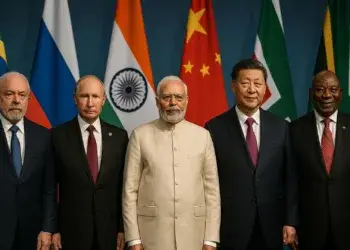
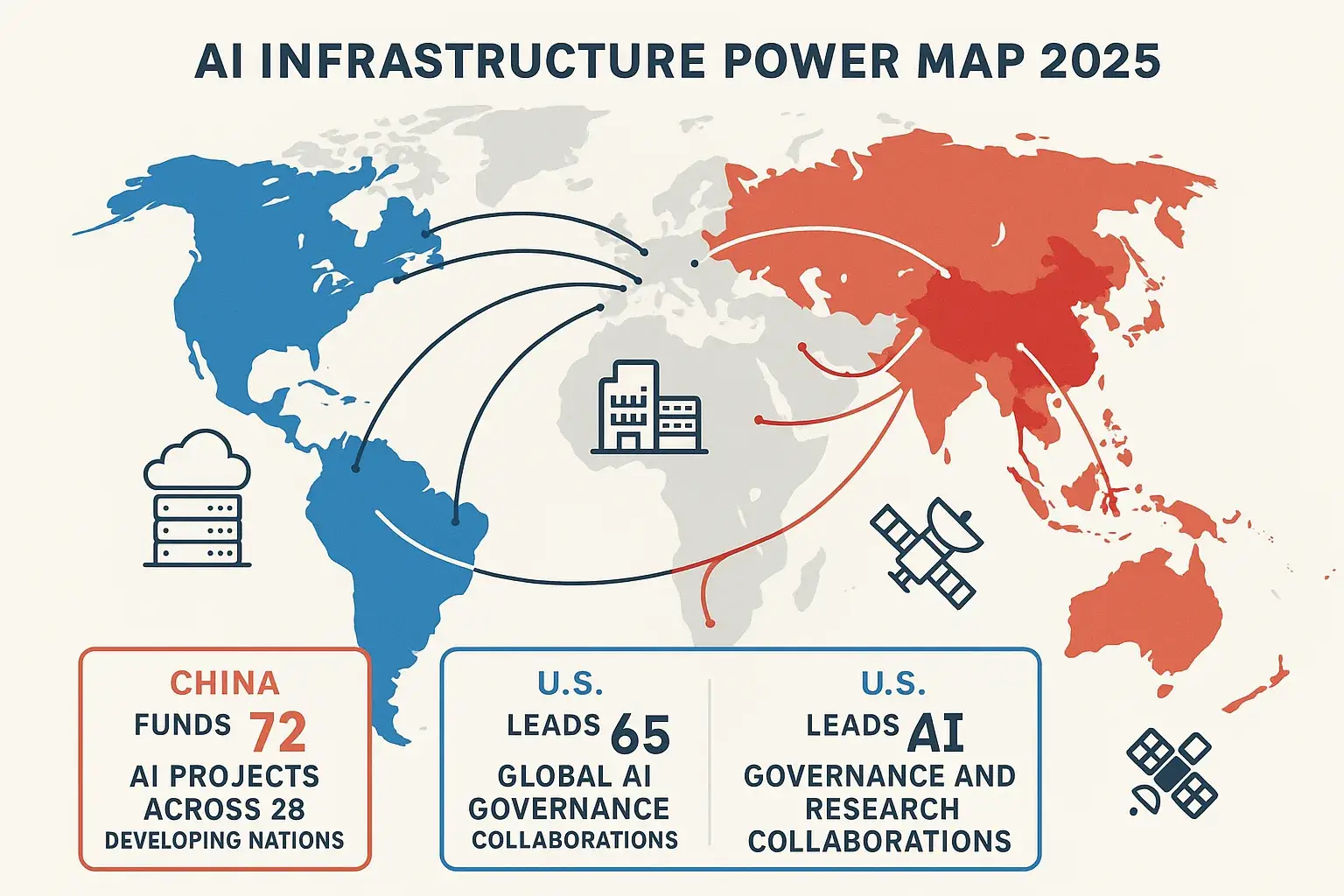
China’s AI diplomacy focuses on building partnerships in the Global South. By exporting AI platforms, training programs, and digital infrastructure, Beijing strengthens long-term influence.
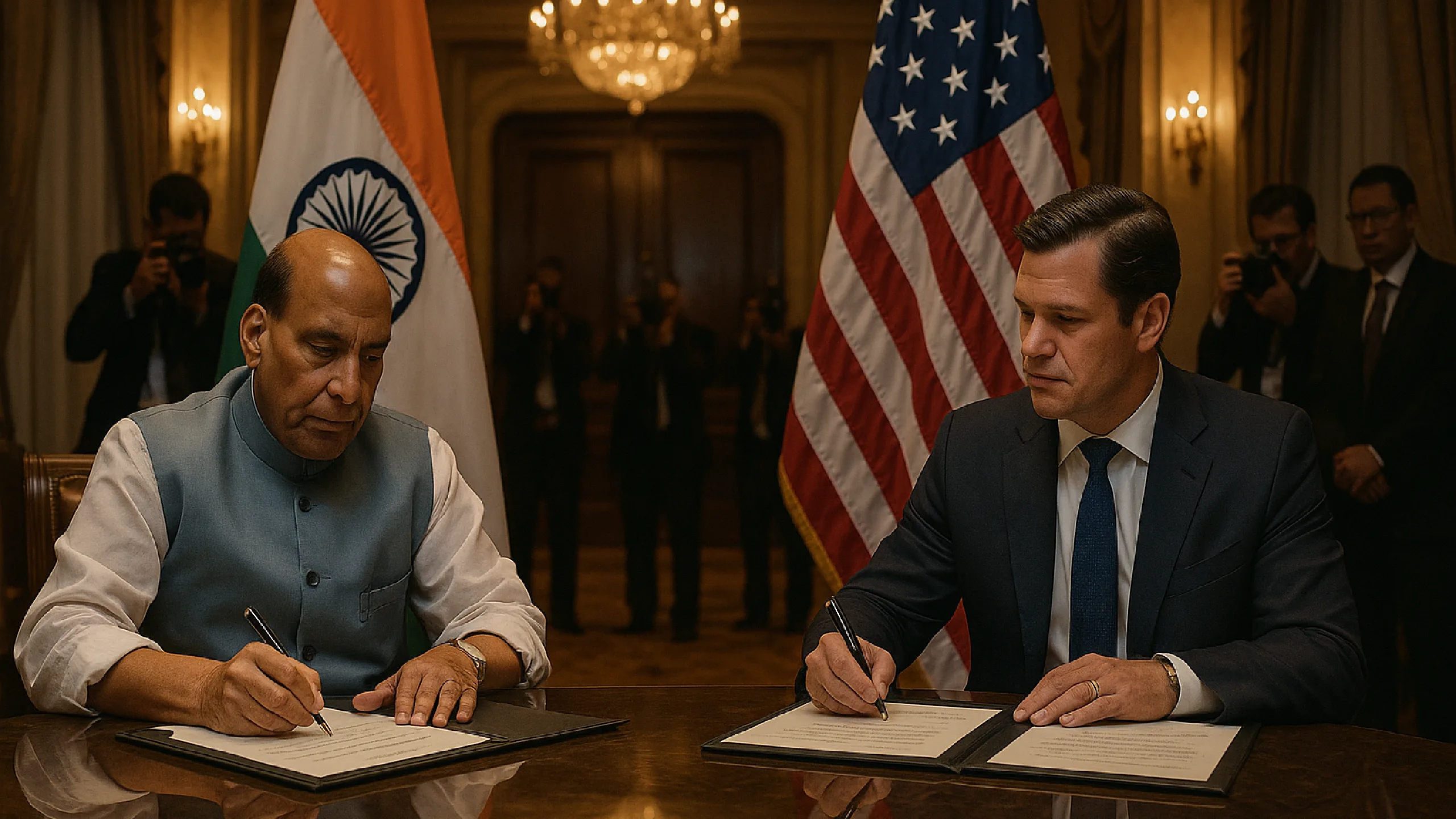
Meanwhile, the U.S. counters through alliances, export controls, and the promotion of global AI ethics. However, critics argue these efforts are less tangible than China’s infrastructure-based approach.
Military, security, and strategic advantage
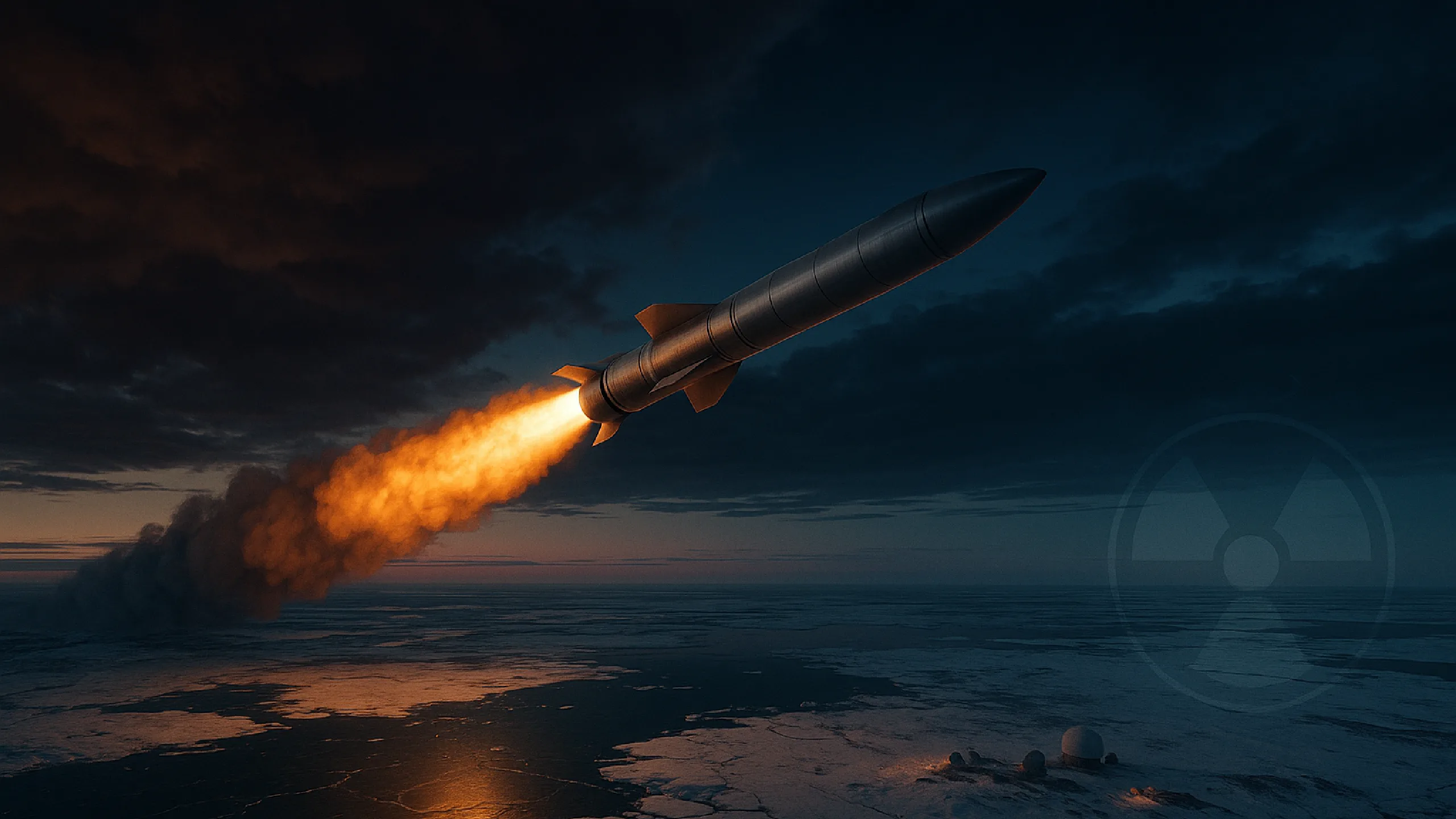
Artificial intelligence now underpins global security. Nations are investing in autonomous weapons, intelligence analysis tools, and cyber-defense capabilities. The race is not only about who leads in AI innovation, but who sets ethical and operational norms for its military use.
Summits on responsible military AI have highlighted the urgency of governance, though international enforcement remains limited.
Compute as a strategic asset
In the emerging AI order, computing power, data sovereignty, and chip production are as critical as energy once was. The nation that controls these assets can project not just economic but geopolitical power. Countries exporting “trusted” AI infrastructure will command both technological and diplomatic leverage.
How Other Nations Are Shaping AI geopolitics
The Global South is no longer a passive observer but an active participant. Countries across Latin America, Africa, and Southeast Asia are drafting national AI strategies, investing in data centers, and negotiating partnerships that protect their digital sovereignty.
Many nations seek balance — engaging with both U.S. and Chinese firms to avoid dependence on a single power. This signals a shift toward multipolar AI geopolitics, where regional blocs may co-author the next generation of AI norms.
Implications & Risks for Global Power
Economic and industrial competition
AI leadership translates directly into advantage in industries such as robotics, biotechnology, logistics, and energy. Nations lagging behind risk losing global competitiveness.
Technological dependency
Countries adopting foreign AI ecosystems could become dependent on external technologies, ceding control over data, infrastructure, and even policy direction.
Governance, ethics, and bias
AI systems frequently reflect the values and biases of their developers. Research has shown that large language models display geopolitical biases aligned with their countries of origin — shaping how information, narratives, and even diplomacy are interpreted.
Escalation and instability
Without international governance, AI advances could destabilize global security. Automation may shorten decision times in military or cyber incidents, increasing the risk of accidental escalation.
The Future of AI geopolitics and Global Power
The rise of AI geopolitics marks a defining moment in world affairs. The contest between the U.S. and China represents more than rivalry — it is a struggle to set the norms and values of a digital future. Nations that succeed will dominate not just economically but ideologically, shaping how intelligence, innovation, and power are distributed across the planet.
In this new era, artificial intelligence is not merely a technology — it is the architecture of influence.
Read our article – Drones, Cyber Wars, and AI: The New Face of Warfare
Questions & Answers
Q1: What is AI geopolitics?
AI geopolitics describes how countries use artificial intelligence as a strategic tool for power, diplomacy, and military advantage.
Q2: Why is the AI rivalry focused on the U.S. and China?
Because both nations lead in research, computing infrastructure, and global influence — representing opposing models of governance and innovation.
Q3: How do smaller nations fit into AI geopolitics?
Developing economies shape global rules by deciding which infrastructure and partnerships to adopt, influencing the future balance of power.
Q4: What are the main risks of AI geopolitics?
Key risks include technological dependency, ethical bias, cyber escalation, and erosion of global cooperation.