

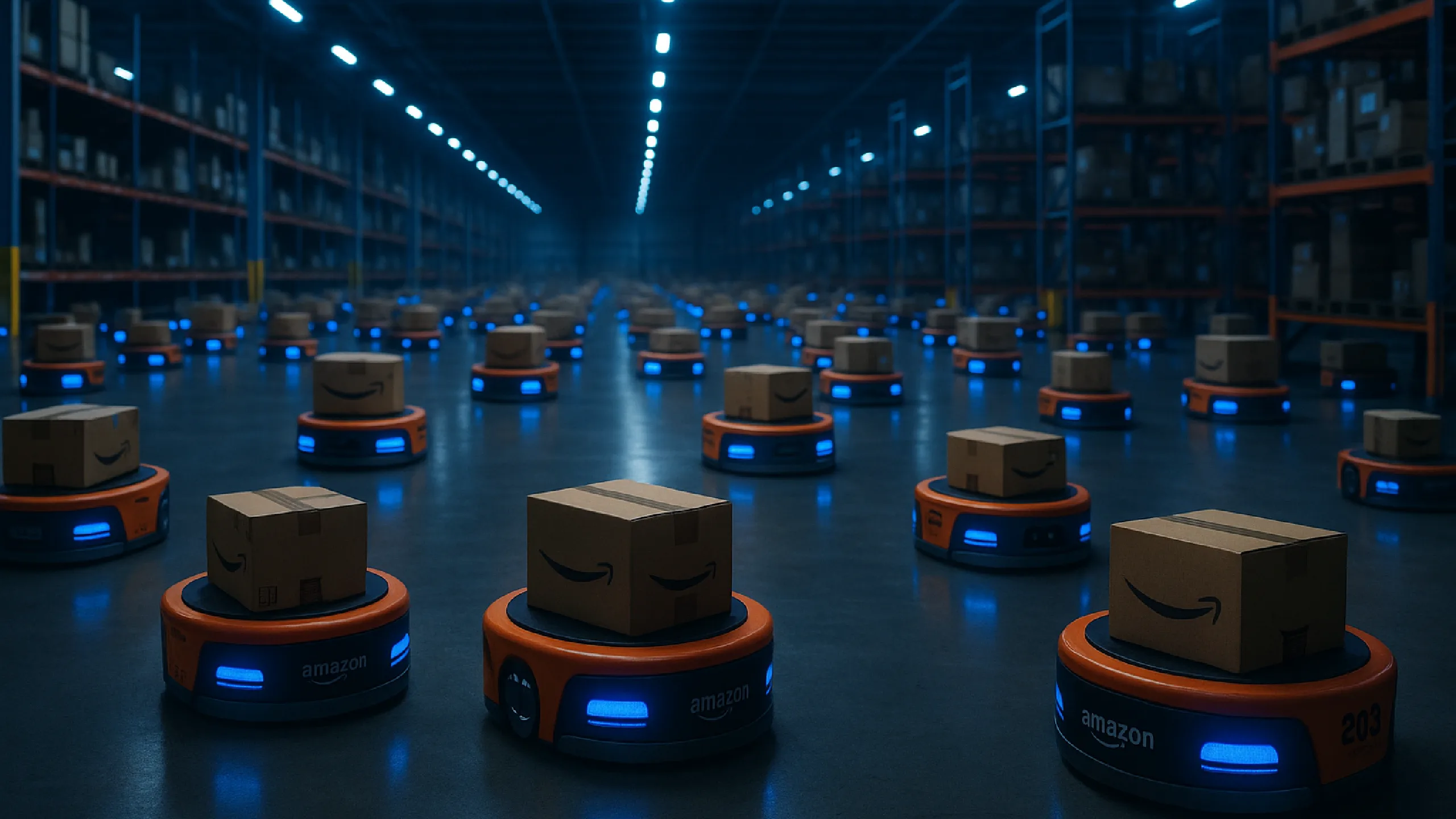
Amazon Delivery Automation Sparks Global Job Debate
Amazon’s delivery automation strategy is drawing worldwide attention as the retail giant unveils AI-powered smart glasses and warehouse robotics designed to boost efficiency and cut costs. At its “Delivering the Future Summit,” Amazon showcased a new generation of automation tools that signal a transformation in logistics and supply chain management.
The Amazon delivery automation project could streamline routes, accelerate shipping, and reduce operational strain — but it also raises serious concerns about job displacement. Internal projections, according to Fox Business, suggest automation could reduce hiring by up to 160,000 roles by 2027, and over 600,000 by 2033.


The Technology Behind Amazon Delivery Automation
At the heart of Amazon’s push lies a blend of AI logistics systems, robotic arms, and wearable tech. The company’s new smart glasses provide delivery drivers with real-time navigation, package scanning, and safety alerts.
Key components driving the initiative:
- AI-driven routing for faster deliveries
- Autonomous sorting arms in fulfillment centers
- Predictive maintenance sensors for delivery vehicles
- Wearable AR smart glasses for workers
- Fleet robots for last-mile logistics
This move reflects a broader trend across global logistics, where companies like FedEx, DHL, and Walmart are experimenting with AI-enabled automation to cut costs and maintain competitive delivery speeds.
Workforce Implications: Efficiency vs. Employment
While Amazon frames this transformation as a way to enhance worker safety and boost efficiency, analysts and labor groups warn it could mark one of the most significant job automation waves in modern retail.
According to leaked strategy documents reported by Fox Business, the Amazon delivery automation rollout could reshape hiring patterns across logistics, especially in the U.S., Europe, and Southeast Asia. Automation is expected to impact:
- Delivery drivers through autonomous routing systems
- Warehouse pickers via robotic fulfillment
- Supervisory staff replaced by predictive AI dashboards
Some economists argue this is part of the inevitable “automation shift” as companies seek post-pandemic resilience. Others, however, warn of a potential “employment vacuum” in middle-income logistics roles.
Balancing Innovation and Responsibility
Amazon maintains that its goal is to “enhance human capability, not replace it.” The company has already invested billions in reskilling programs such as “Career Choice,” which offers training in IT and robotics maintenance.
Yet critics point to a broader ethical question: can the benefits of AI logistics and warehouse robotics justify the potential disruption to hundreds of thousands of livelihoods?
Policymakers and economists are urging companies like Amazon to establish:
- Transparent automation timelines
- Fair retraining initiatives
- Labor protections for transitioning workers

Global Impact on Supply Chains
The Amazon delivery automation rollout is not just a corporate experiment — it could redefine global trade logistics. Faster fulfillment times and lower costs may boost e-commerce profitability but also intensify competition, pushing smaller logistics firms to adopt similar automation technologies or risk obsolescence.
Regions such as Europe and Asia-Pacific are expected to follow suit, with governments already considering tax incentives for automation investment while simultaneously reviewing job-security frameworks.
The Future of AI Logistics and Employment
The rise of Amazon delivery automation exemplifies both progress and peril in the digital economy. While the integration of AI logistics and robotics promises efficiency, speed, and scalability, it also sparks a crucial conversation about how societies will protect workers in an era of intelligent machines.
As Amazon leads the way, the world must navigate a fine balance — ensuring that automation fuels prosperity without leaving the workforce behind.
See our article – The Future of Work: How AI Transforms Every Industry
Questions & Answers
Q1: What is Amazon delivery automation?
A1: It refers to Amazon’s use of AI, robotics, and smart devices to automate delivery, warehouse, and logistics operations.
Q2: How many jobs could Amazon automation affect?
A2: Internal estimates suggest between 160,000 and 600,000 jobs could be impacted globally by 2033.
Q3: What are Amazon’s new smart glasses?
A3: AI-powered glasses designed to assist delivery drivers with real-time route guidance and safety alerts.
Q4: How is Amazon addressing worker concerns?
A4: Amazon runs retraining programs such as “Career Choice” to help employees transition into tech-oriented roles.