


Banking Deal Surge: What’s Driving Big Bank Profits and What’s the Risk?
The term banking deal surge aptly captures what’s happening on Wall Street in 2025. Major banks are posting strong earnings driven by a resurgence in mergers and acquisitions (M&A) and investment-banking fees. Yet beneath the headline profits, debt burdens, market volatility and regulatory pressures remain very real risks.
This article examines why the banking deal surge is powering bank earnings, which institutions are benefiting most, and what underlying risks could threaten the current boom.


Why the Banking Deal Surge Is Happening
M&A and Investment Banking Fees Skyrocket
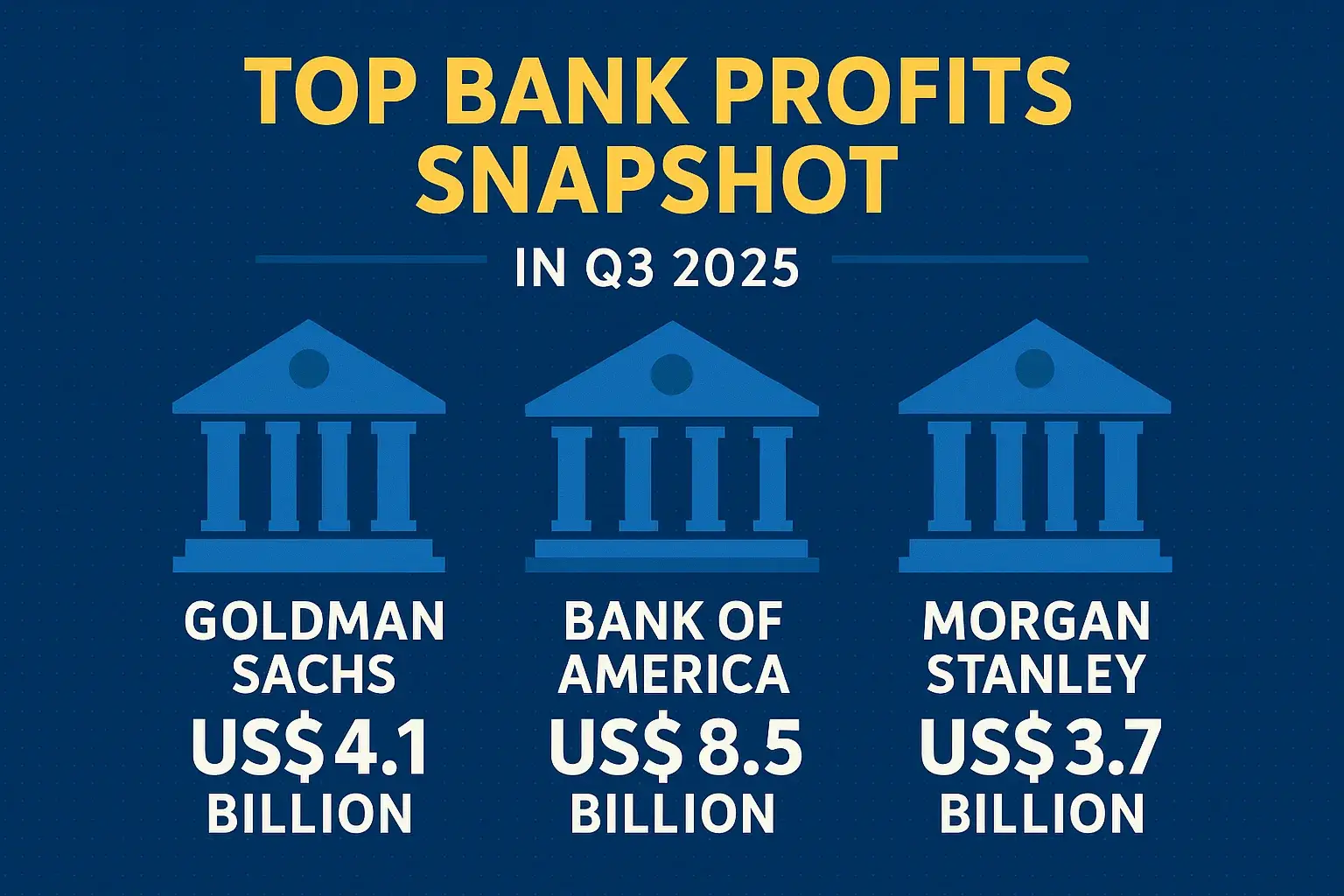
In 2025, several leading banks reported outsized gains thanks to the banking deal surge:
- Goldman Sachs posted a profit of around $4.1 billion, with investment banking fees rising by more than 40 % and advisory revenues up roughly 60 %.
- Bank of America’s net income reached $8.5 billion, supported by a 43 % rise in investment-banking fees and a global M&A total of $1.26 trillion in the third quarter alone.
- Other major institutions such as JPMorgan Chase and Morgan Stanley also saw similar gains, with underwriting fees up as much as 80 % year-on-year.
Key factors behind the surge:
- Corporations, flush with liquidity and pressure to consolidate, are driving record-breaking M&A volumes.
- Equity markets are more active again, supporting higher advisory and underwriting revenue.
- Banks are pivoting toward fee-based income models, balancing slower lending with high-margin deal-making.
Lending, Deposits and Net Interest Income
Beyond M&A fees, the banking deal surge extends into traditional operations:
- Net interest income forecasts rose sharply across U.S. banks, with Bank of America projecting nearly $15.7 billion in the fourth quarter.
- Loan growth and deposit inflows remain stable, but banks increasingly rely on fee income rather than interest spreads alone.
Winners and Risks in the Banking Deal Surge
Top Performers
- Large diversified banks such as Goldman Sachs, Bank of America, and Morgan Stanley dominate the banking deal surge because of their deep M&A pipelines and global client bases.
- These institutions benefit most from the renewed appetite for mergers, IPOs and restructuring deals.
Key Risks
- Rising debt exposure: Underwriting large-scale deals often requires higher leverage, which could strain balance sheets if credit conditions tighten.
- Market and systemic risk: The concentration of major deals in a few banks increases systemic vulnerability if one suffers losses.
- Regulatory oversight: Global regulators have warned that complex cross-border transactions and mega-mergers heighten the risk of contagion during downturns.
- Economic headwinds: Slower global growth or sudden market corrections could halt the banking deal surge almost overnight.
What the Banking Deal Surge Means for the Financial System
The banking deal surge signals a powerful recovery for investment-banking activity after years of subdued performance. It underscores renewed corporate confidence and the return of capital markets as growth engines.
However, the concentration of profits in a few financial giants raises legitimate questions about risk distribution and market stability. If corporate debt levels rise too quickly or interest rates remain elevated, this wave of deal-making could expose fragile leverage points across the system.
In essence, the banking deal surge represents both an economic success story and a warning flag: profit expansion today could become overexposure tomorrow.
A Bold Banking Deal Surge — With Caution Attached
The banking deal surge is undeniably powering major banks’ strong earnings in 2025 — driven by robust M&A activity, booming advisory fees and steady lending. Yet behind the optimism lies vulnerability: swelling debt, geopolitical tension and systemic concentration risks could challenge sustainability.
The takeaway? The banking deal surge highlights renewed energy in the global financial system, but maintaining long-term stability will require prudent risk management, diversification and continued regulatory vigilance.
See our other article – Global Debt Time Bomb: Nations on the Brink by 2029
Questions & Answers
Q1: What is meant by “banking deal surge”?
A1: It refers to the sharp rise in bank earnings driven by major mergers, acquisitions, and investment-banking activity among leading financial institutions.
Q2: Which banks are benefiting most from the banking deal surge?
A2: Global banks like Goldman Sachs, Bank of America, JPMorgan Chase, and Morgan Stanley are among the biggest beneficiaries due to their extensive advisory and underwriting operations.
Q3: What risks accompany the banking deal surge?
A3: Rising debt, market volatility, and regulatory pressure are major risks that could threaten the stability of the current banking profit cycle.
Q4: Will the banking deal surge continue?
A4: It’s likely to persist in the near term, but a slowdown in global growth or tighter credit conditions could cause M&A and investment banking activity to cool.
| Source | Description | Link |
|---|---|---|
| Reuters – US Banking Giants Expect Dealmaking Spree | Reports surge in global M&A, US$1.26 trillion in Q3 | https://www.reuters.com/business/finance/bank-america-profit-rises-investment-banking-strength-2025-10-15 |
| Reuters – Goldman Sachs Profit Jumps | Bank profits rise 42 % on record M&A activity | https://www.reuters.com/legal/transactional/goldman-sachs-profit-jumps-bankers-cash-big-deals-2025-10-14 |
| Business Insider – Wall Street Banks Blockbuster Quarter | Summary of record profits from major investment banks | https://www.businessinsider.com/goldman-morgan-stanley-jpmorgan-citi-bofa-dealmaking-pipelines-2025-10 |
| ResearchGate – Effect of Mergers on Bank Risk-Taking | Explores systemic risk implications of large-scale banking deals | https://www.researchgate.net/publication/372505433_The_Effect_of_Mergers_and_Acquisitions_on_Bank_Risk_Taking |