
Global Geopolitics and AI: The Emerging “AI Cold War” Between the U.S. and China
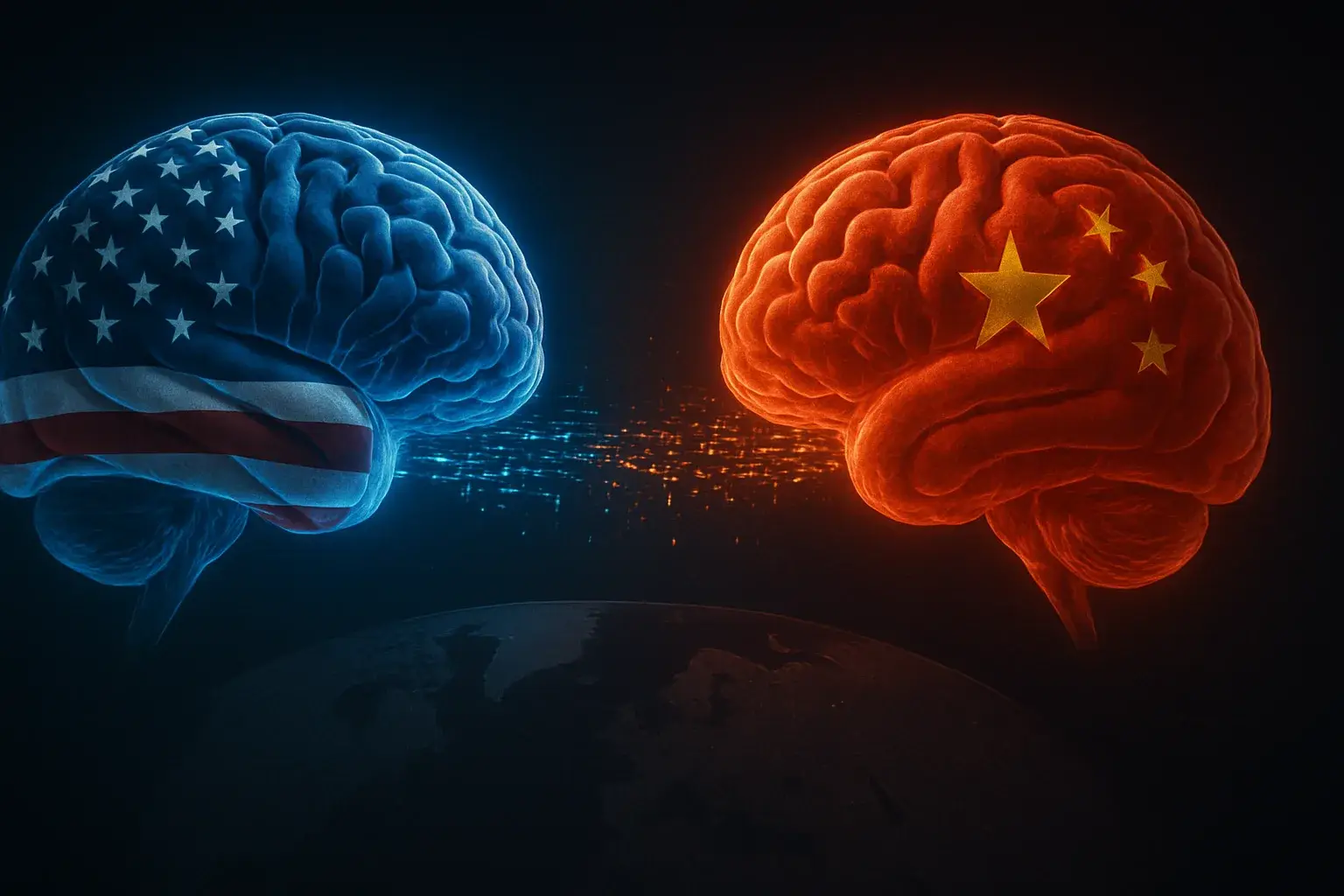
Artificial Intelligence is no longer just a technological milestone—it’s the defining frontier of global geopolitics. As the AI Cold War intensifies between the U.S. and China, the world is witnessing a new era of digital competition where algorithms, data, and compute power have replaced nuclear arsenals as the ultimate measures of dominance.
Within the first 100 words of this story lies the foundation of today’s most critical geopolitical tension: the AI Cold War is shaping global alliances, trade routes, and even the ethics of warfare.


The Roots of the AI Cold War
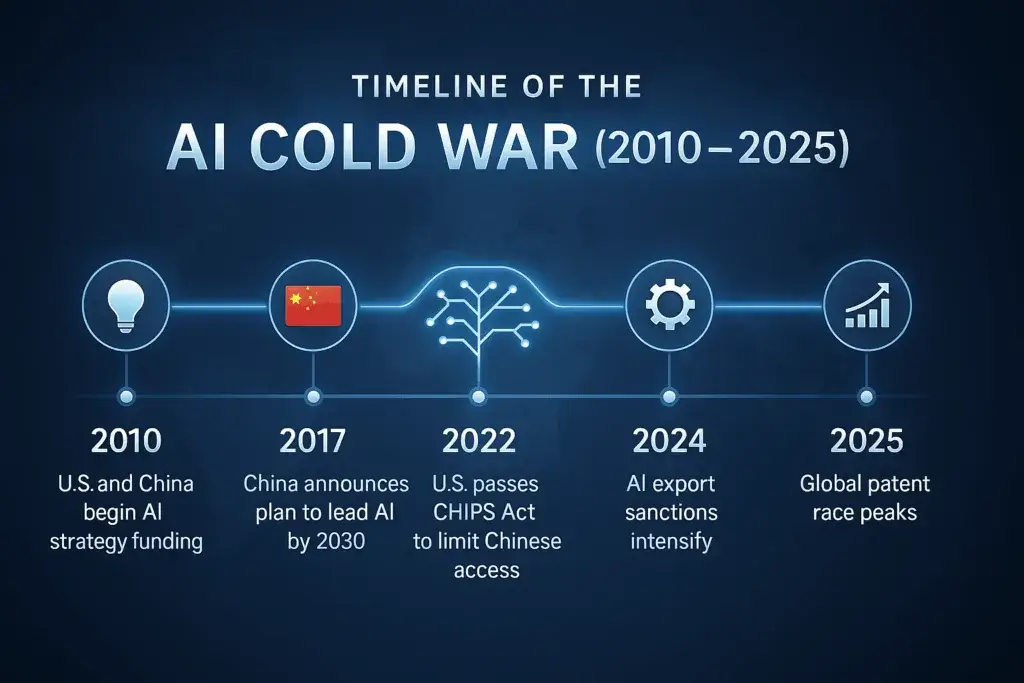
The origins of this rivalry trace back to the 2010s, when both superpowers began pouring billions into AI research. For the U.S., Silicon Valley giants such as Google, Microsoft, and OpenAI became the vanguard of innovation. China responded with state-backed megaprojects, aiming to surpass U.S. capabilities by 2030.
What began as a competition in data and algorithms has evolved into a race for AI dominance—with implications for defense, surveillance, and global governance. The stakes are no longer just about who builds smarter machines, but who controls the infrastructure of the digital future.
How the Rivalry Shapes Global Power
The U.S.–China rivalry in AI extends far beyond research labs. It’s a contest for influence over every layer of the digital ecosystem:
- Semiconductor supremacy: The U.S. has imposed strict technology sanctions to block China’s access to advanced chips used in training large AI models.
- Data control: China holds vast datasets through its 1.4 billion citizens, while the U.S. leads in open research and private sector innovation.
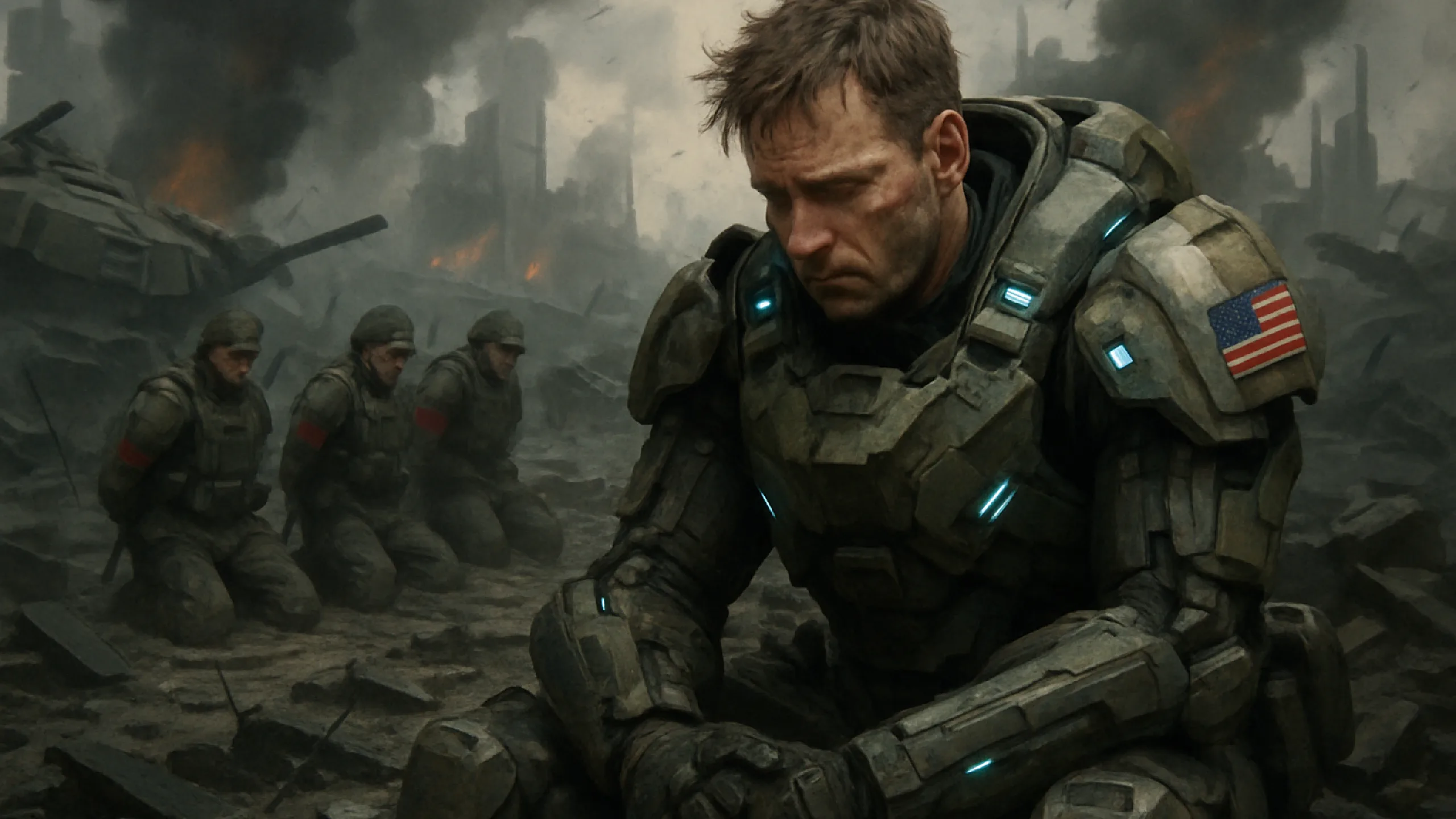
- Military AI: Both nations are developing autonomous systems, predictive analytics, and AI-driven command tools to modernize defense capabilities.
- Ethical frameworks: The U.S. champions democratic governance of AI; China promotes state-centric oversight—offering different models to the world.
This competition is fracturing the global order, dividing nations into AI alliances aligned with one of the two superpowers.
The Tech Race Accelerates
The global AI race is moving faster than ever. Washington’s CHIPS and Science Act and Beijing’s Next Generation AI Plan represent massive investments into domestic capability building.
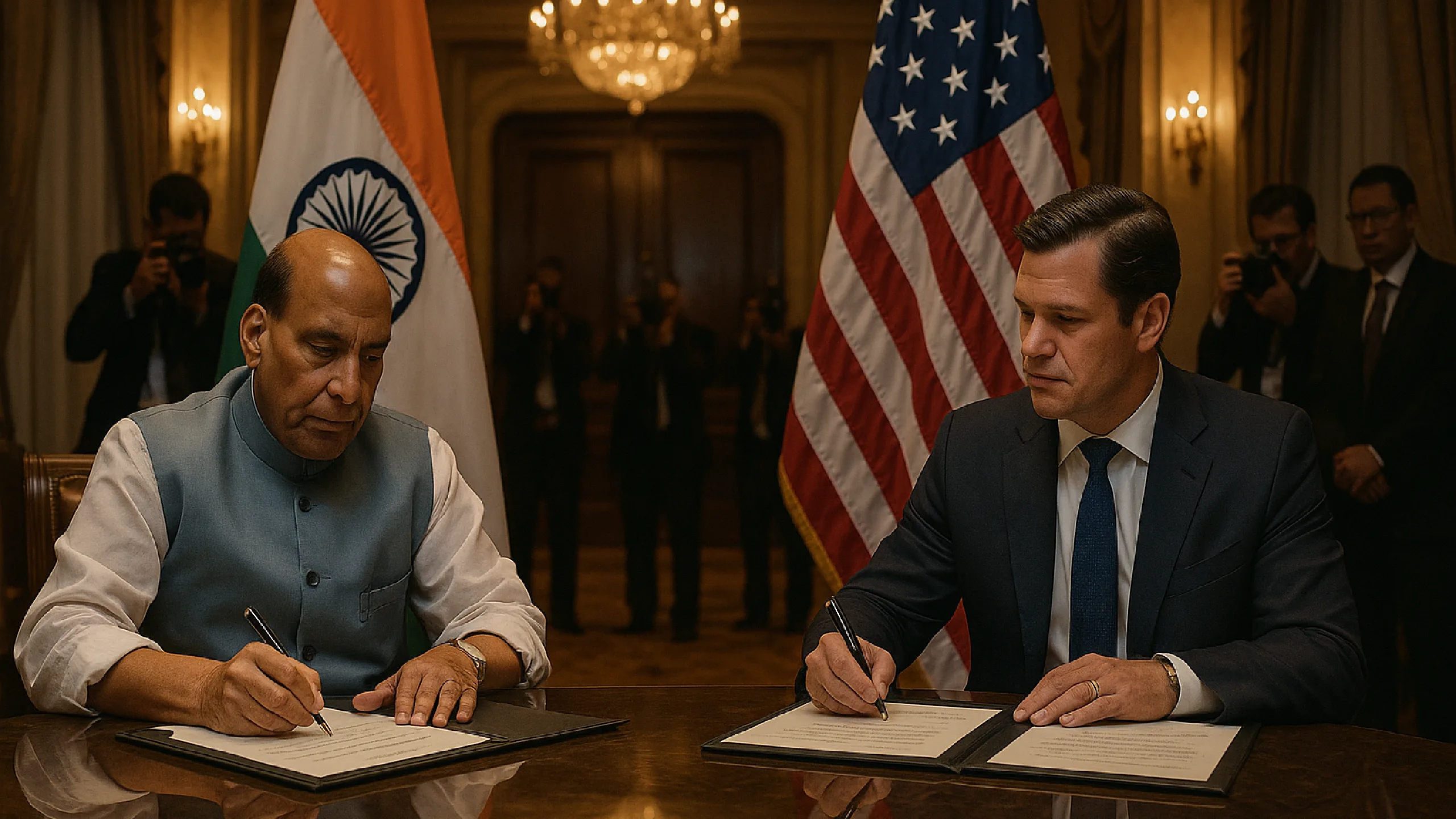
Meanwhile, third countries like India, Japan, and members of the EU are forming their own AI blocs—seeking independence from both powers. The AI Cold War is thus no longer bilateral; it’s a complex web of global realignments.
Key developments include:
- 2023–2024: Export controls tightened on high-end GPUs, cutting off Chinese AI firms from U.S. technology.
- 2025: China launches its state-backed AI supercluster initiative to rival American cloud dominance.
- 2026 (Projected): Over 70% of global AI patents expected to originate from either the U.S. or China.
This geopolitical tension has even extended into trade, with AI-powered chips now treated like strategic weapons.
AI, Surveillance, and the Ethics Divide
Perhaps the sharpest contrast between the two powers lies in how they deploy AI domestically. The U.S. faces scrutiny over data privacy and AI bias, while China employs AI systems for mass surveillance, facial recognition, and social governance.
This ethical divide influences how nations choose their partners. Countries concerned with democratic accountability lean toward U.S.-backed systems, while those seeking centralized control adopt Chinese AI frameworks.
In essence, the AI Cold War has become a battle of ideologies as much as technologies.
Global Consequences of the AI Divide
- Economic ripple effects: Nations excluded from AI supply chains face slower technological progress.
- Cybersecurity escalation: AI-driven cyberattacks are expected to surge as both powers weaponize digital tools.
- Regulatory fragmentation: Competing standards may lead to incompatible global systems, stifling collaboration.
- Innovation bifurcation: Separate ecosystems could emerge, forcing businesses to choose sides between U.S. and Chinese platforms.
This fragmentation risks undermining the cooperative spirit that once defined global innovation.
The Future of AI Geopolitics
As AI continues to evolve, so too will the strategies nations use to gain leverage. Quantum computing, synthetic data, and exascale processing are the next frontiers. Whether the AI Cold War leads to innovation or division will depend on international dialogue and shared standards.
Without global cooperation, the risk of a permanent digital divide looms large.
The New Digital Iron Curtain
The world has entered an era where geopolitical power is measured not by land or weapons, but by compute capacity and data access. The AI Cold War between the U.S. and China will define the next generation of economic, military, and moral power.
To prevent a future of fractured systems and algorithmic isolation, both sides must recognise that artificial intelligence—like climate change or nuclear power—demands shared stewardship. In the end, global peace may depend on how this digital rivalry is managed.
See our other article – Drones, Cyber Wars, and AI: The New Face of Warfare
Questions & Answers
Q1: What is the AI Cold War?
The AI Cold War refers to the growing technological and strategic competition between the U.S. and China for dominance in artificial intelligence.
Q2: Why is AI central to U.S.–China rivalry?
AI underpins economic growth, military innovation, and surveillance technology—making it the core of 21st-century power competition.
Q3: How do sanctions impact the AI race?
U.S. export controls limit China’s access to advanced chips, slowing its model training and AI infrastructure development.
Q4: Can global cooperation in AI still exist?
Yes, but it requires international governance frameworks that balance innovation with security and ethical safeguards.
| Source | Description | Link |
|---|---|---|
| Financial Times | Coverage on U.S. export controls and global chip sanctions impacting China’s AI ambitions. | https://www.ft.com/ |
| The Economist | In-depth analysis of the emerging AI Cold War and geopolitical power shifts. | https://www.economist.com/ |
| Reuters | Reports on China’s AI development goals and U.S. CHIPS and Science Act initiatives. | https://www.reuters.com/ |
| Brookings Institution | Policy research on AI governance, ethics, and international cooperation frameworks. | https://www.brookings.edu/ |
| MIT Technology Review | Insights into AI ethics, global innovation trends, and national AI strategies. | https://www.technologyreview.com/ |