

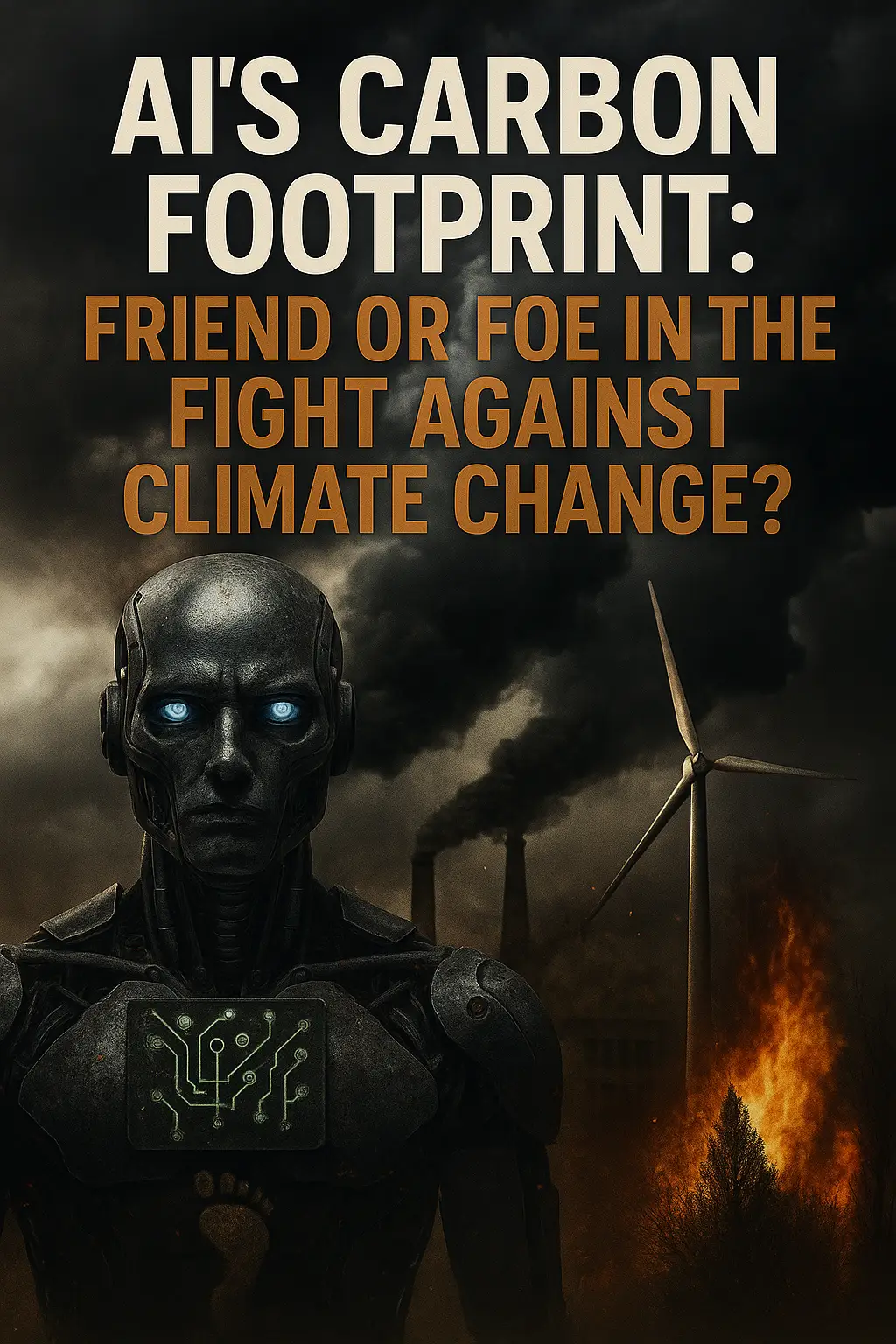
The Double-Edged Role of AI in Climate Change
Artificial Intelligence (AI) is often portrayed as a transformative force with the potential to revolutionize industries, improve efficiency, and tackle some of humanity’s greatest challenges. Yet, its rapid growth also raises pressing questions about its environmental impact. When it comes to climate change, AI plays a double-edged role: it both contributes to the problem and offers powerful tools for solutions.
AI’s Carbon Footprint: A Growing Concern
One of the most pressing issues surrounding AI is its energy consumption. Training large-scale models like GPTs requires immense computational resources, which translates into high electricity use. Depending on the energy source, this can generate significant greenhouse gas emissions. For instance, training a single state-of-the-art language model has been estimated to emit hundreds of tons of carbon dioxide—the equivalent of flying dozens of people across the Atlantic.


Beyond training, AI systems run continuously on massive server farms. These data centers, which already account for about 1–2% of global electricity consumption, must be kept cool around the clock. The cooling process itself demands huge amounts of energy and, in some cases, water for thermal regulation. As AI adoption expands into more sectors—finance, healthcare, transportation—its share of the global carbon footprint is likely to rise unless greener practices are prioritized.
The hardware that powers AI also comes with environmental costs. Advanced processors like GPUs and TPUs rely on rare earth minerals, the mining and refining of which are energy-intensive and environmentally disruptive. Manufacturing demand for these chips is accelerating, adding further strain to global supply chains and natural resources.
AI as a Tool for Climate Solutions
Despite its environmental burden, AI also has enormous potential to help combat climate change. When used strategically, it can significantly reduce emissions and improve sustainability efforts.
Smarter Energy Use
AI is already helping optimize power grids. By predicting energy demand and balancing renewable inputs, AI reduces waste and ensures efficient use of resources. Google, for example, cut the energy needed to cool its data centers by 40% using AI-powered systems—a step that dramatically reduced emissions and costs.
Climate Forecasting and Modeling
AI enhances climate modeling by processing vast datasets faster and with greater precision than traditional methods. These models improve predictions of extreme weather, sea-level rise, and changing carbon cycles. With more accurate forecasts, governments and communities can better prepare for disasters, saving both lives and resources.
Accelerating Renewable Energy
Solar and wind power are variable by nature, but AI can forecast their output more reliably, helping integrate them into national grids. It can also optimize placement of wind farms or solar panels, ensuring maximum efficiency.
Environmental Monitoring
From tracking deforestation to detecting methane leaks, AI-equipped satellites and sensors provide near real-time monitoring of environmental damage. This technology strengthens enforcement of climate policies and helps organizations stay accountable for their emissions.
Innovation in Carbon Capture
AI is even being applied in materials science, where it helps discover new compounds for carbon capture and storage. Such innovations could become crucial in meeting global emission targets.
Climate Change Threats to AI
The relationship between AI and climate change isn’t one-way. As climate change intensifies, it poses risks to the very infrastructure that powers AI.
Data centers rely heavily on water for cooling, but droughts and heatwaves—exacerbated by global warming—threaten this supply. Extreme weather events such as hurricanes, floods, and wildfires can also disrupt or damage critical AI infrastructure. In addition, as governments introduce stricter carbon regulations and energy costs rise, operating large AI systems may become more expensive, pressuring companies to seek sustainable alternatives.
The Path Forward
AI’s impact on climate change depends largely on choices made today. If left unchecked, its carbon footprint could accelerate environmental degradation. But if harnessed responsibly, AI could become one of humanity’s most effective tools in fighting climate change.
The path forward requires a dual approach: making AI greener by transitioning data centers to renewable energy, improving hardware efficiency, and setting industry-wide sustainability standards—while simultaneously deploying AI to optimize climate solutions across energy, transportation, agriculture, and beyond.
Ultimately, AI and climate change are intertwined challenges of the 21st century. The same technology that risks contributing to the crisis also holds the keys to addressing it. The real question is not whether AI will shape the climate fight—but whether it will be wielded wisely enough to help tip the scales toward a more sustainable future.